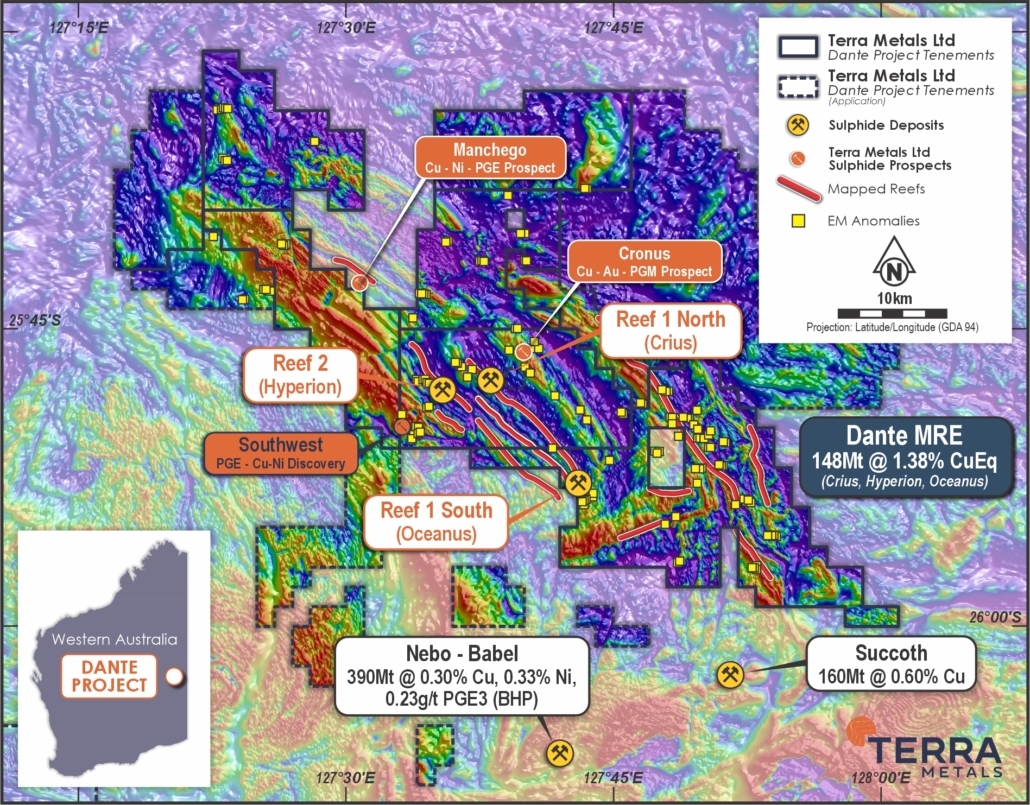
Dante Project – A Polymetallic System with Scale

Exploration Uncovers Multiple Near-Surface Systems Across One Discovery Zone

Terra Metals is deploying five drill rigs to Dante, as it works to grow and define the Dante polymetallic discovery, with strong and shallow visual signals emerging from the earliest diamond drilling.

The company’s focus in 2026 lies on the primary magmatic Platinum Group Metals (PGM), copper and nickel discovered at the Southwest Prospect, where grades as high as 54g/t PGE3 were recently recorded.

Terra Metals reported the discovery of large Bushveld-style Cu-PGE sulphide reefs at its wholly-owned Dante Project in June 2024.

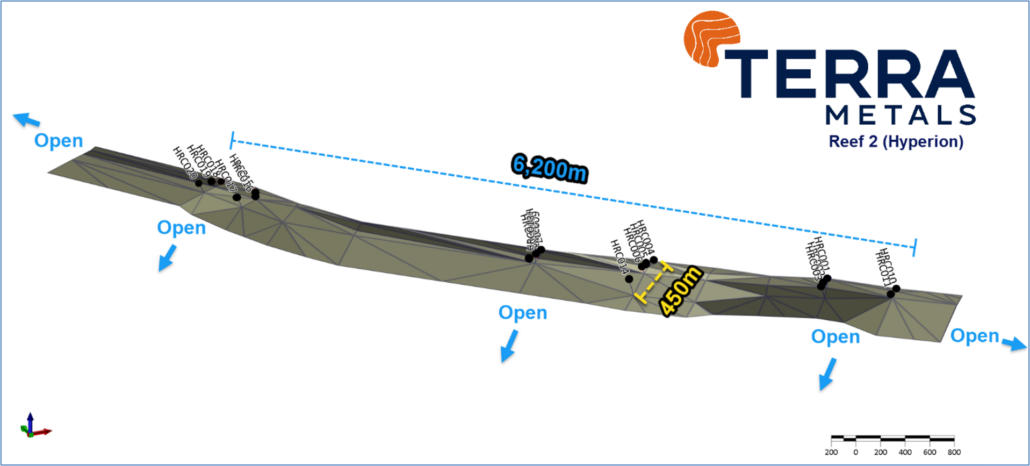
The discovery included three large-scale, stratiform titanium-vanadium-copper-PGM reefs extending over a 20km strike length, with mineralisation starting from surface and extending to depths greater than 250m.

Recent tenement acquisitions have extended strike potential to over 80km, with hundreds of kilometres of prospective stratigraphy within the project footprint.

Terra Metals’ Dante discovery was the first of its kind in Australia.

More than 38,000 metres of diamond and RC drilling has already confirmed the potential for a large sulphide deposit containing copper, gold, PGEs, vanadium and titanium.

While laboratory analysis of the first deep diamond drillhole of 2026 is still to come, it immediately revealed shallow, visual net-textured to semi-massive coarse-grained sulfides.

Regional Scale – Large magmatic Cu-Au-PGE-V205-Ti02 targets and extensive outcropping mineralised PGE and Gold reef systems.

Strategic Location – Close proximity to BHP’s $1.7 billion Nego-Babel mine development, 15km to the south.

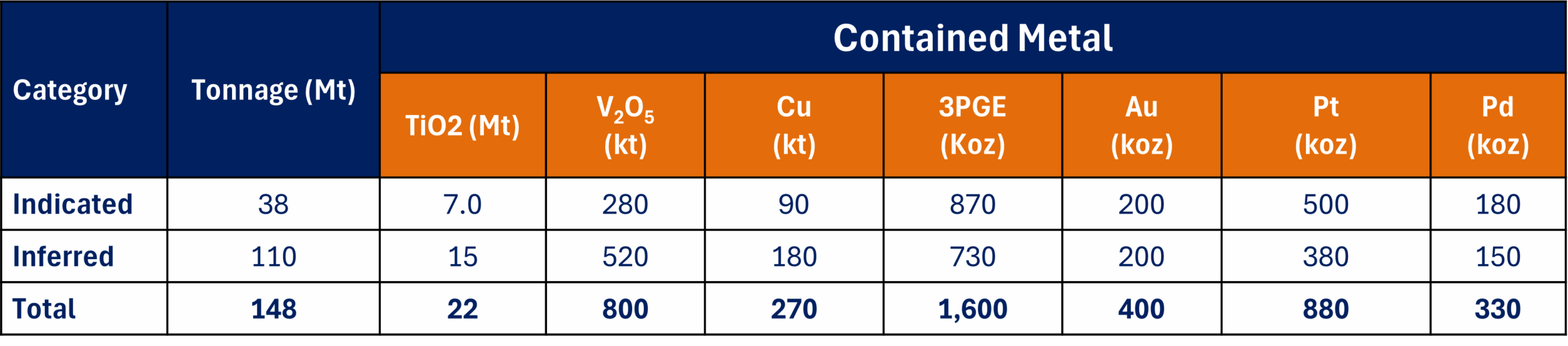
Suited to Open-Pit Development – Terra Metals is working to grow the existing Dante Reefs Mineral Resources Estimate (2025), a 148Mt shallow resource at 1.38% Copper Equivalent grade (titanium, vanadium, PGE, copper & gold), which has the potential for open-pit mine development

Compelling Geochemistry –Auger geochemistry highlights widespread Cu-Au-PGE-Ni anomalism over many kilometres.

Exciting Geology – Mafic-ultramafic layered intrusion of the highly prospective Giles Complex.

Well Funded – Terra Metals is fully funded after raising $85m in 2026.

Terra Metals acquired the Dante copper-platinum group element-gold-nickel (“Cu-PGE-Au-Ni”) project in the West Musgrave region of WA, in October 2023.

The West Musgrave region is a major metallogenic province and emerging major mining hub with BHPs $1.7 billion Nebo-Babel Cu-Au-PGE-Ni mine development 15km to the south.

The Dante Project contains advanced large-scale magmatic Cu-PGE-Au-Ni targets and PGE-Au Reef targets, including ~42km of outcropping mineralised strike grading an average of 1.1 g/t PGE3, 1.13% V2O5, and 23.2% TiO2, with grades up to 3.4 g/t PGE3.

Dante has a signed Native Title Agreement with the Ngaanyatjarra Land Council.
Extensive historical dataset including full coverage airborne electromagnetic (“EM”) and magnetics, over 3,000 auger drillholes, reverse circulation and diamond drillholes, ground EM and gravity.
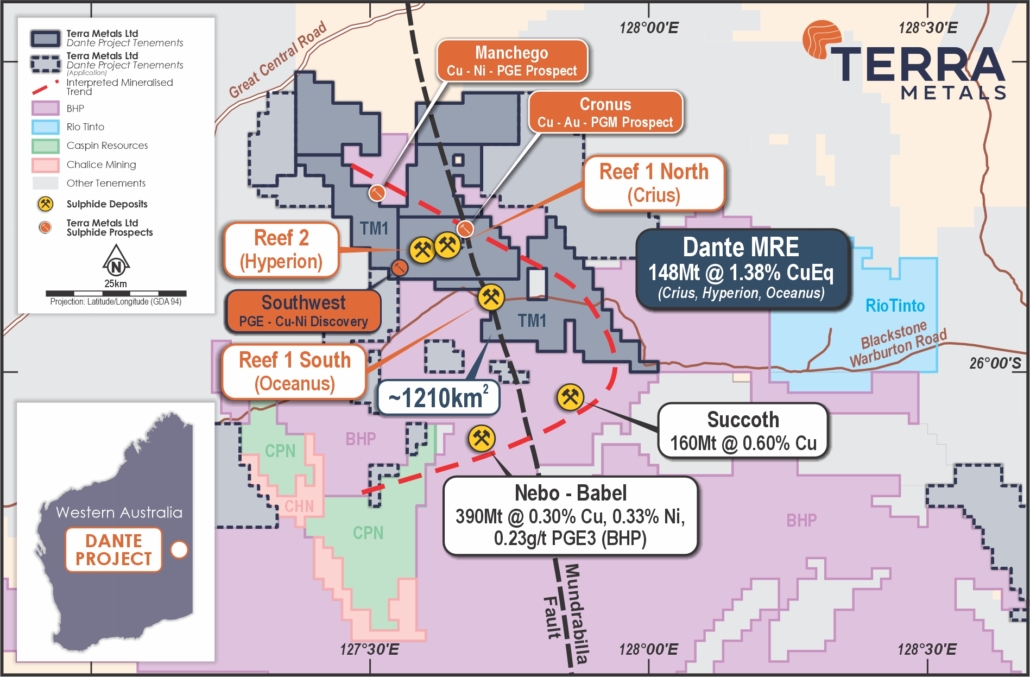
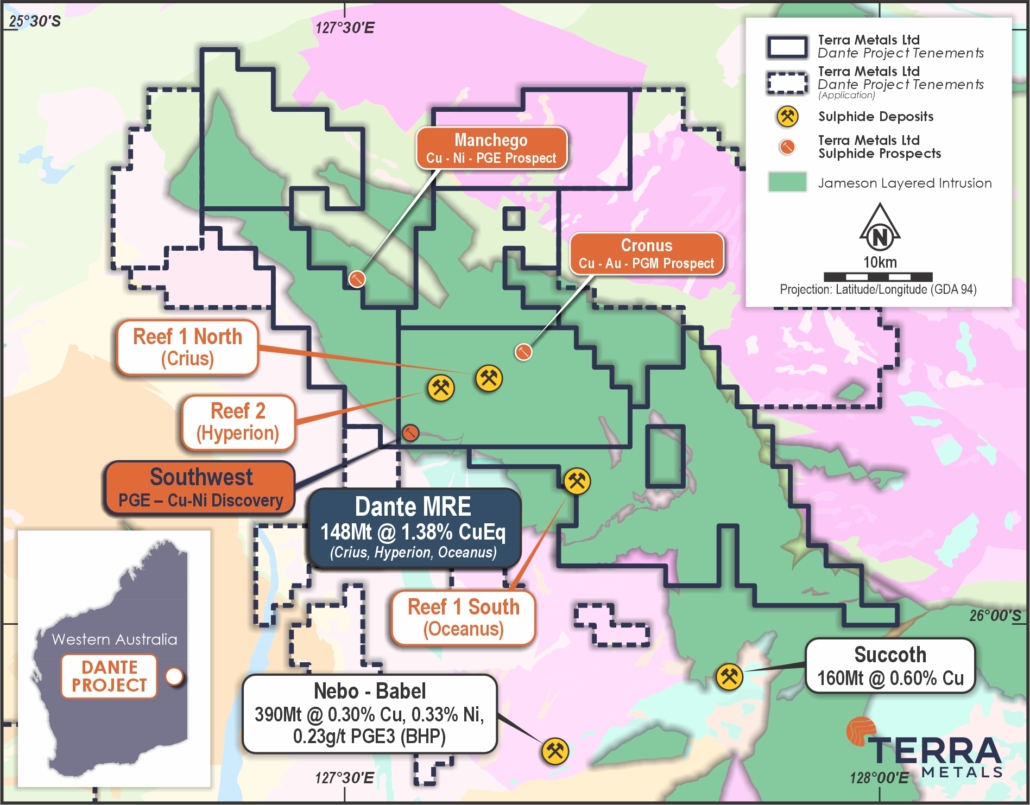
The Dante Project contains large-scale magmatic Cu-PGE-Au-Ni targets, as well as extensive outcropping PGE-gold (“Au”) reefs and is in the same geological complex as one of the world’s largest mining development projects, Nebo-Babel (BHP).

Dante Reefs Mineral Resource Estimate

One of the World’s Largest Ti-V-PGE-Cu Resources from Surface

  • Metallurgy demonstrates three high-grade concentrates with excellent recoveries
  • A globally unique Ti-V rich resource, that can produce a high-grade Cu-Au-PGE concentrate
  • Less than 5% of outcropping strike tested
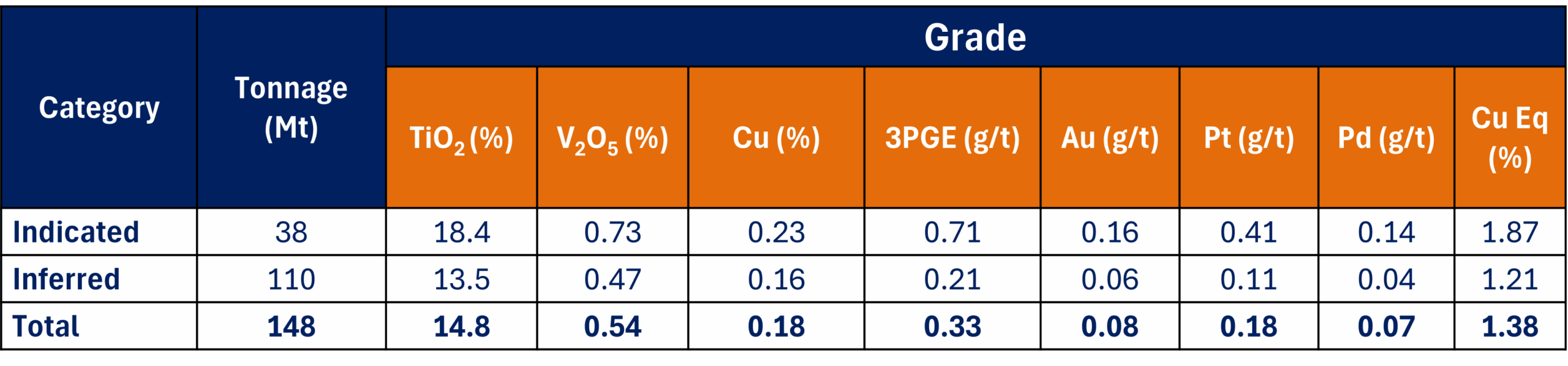
Table 1. Dante Project Mineral Resources (August 2025)
Note: Some numbers may not add up due to rounding.
Geological Setting

The Musgrave block (140,000km2) in central Australia is located at the junction of three major crustal elements: the West Australian, North Australian, and South Australian cratons. It is a Mesoproterozoic, east-west trending orogenic belt and comprises a variety of high grade (amphibolite to granulite facies) basement lithologies overprinted by several major tectonic episodes. The discovery of the Nebo-Babel Cu-Au-PGE-Ni sulphide deposit in the western portion of the Musgrave block (Western Australia), was considered to be the world’s largest Cu-Au-PGE-Ni sulphide discovery since Voisey’s Bay, prior to the discovery of Julimar/Gonneville in 2018.

The West Musgrave region of Western Australia hosts one of the most important clusters of mafic–ultramafic layered intrusions globally. This layered intrusion is known as the “Giles Complex” (~1074 Ma) (refer Figure 2) and is considered to be one of the world’s largest layered intrusions. The Giles Complex layered intrusion is a mafic layered intrusion with proven PGE reefs (Appendix 1) that are commonly compared to the Bushveld and Stellar PGE reef systems. The Bushveld Complex in South Africa is estimated to contain 2.2 billion ounces of PGEs and Au making it the world’s most important source of PGEs.

The Mesoproterozoic Jameson Range intrusion forms part of the Giles Intrusive Complex. Dante Project is dominated by the Jameson Intrusion which is predominantly mafic in composition consisting of olivine-bearing gabbroic lithologies, similar to that of Nebo-babel with an abundance of magnetite and ilmenite. Lithologies containing more than 50 vol% magnetite and ilmenite are classified titano-magnetites. Similar occurrences of titano-magnetite are known from the upper parts of other layered intrusions, such as the Bushveld Complex.

The Jameson Range intrusion itself is confirmed to host several laterally extensive layers of PGE reefs, as seen in magnetics and outcrop, which show an enrichment in PGEs together with Au (refer Appendix 1). Four main lithological zones in the Jameson Range have been noted from the base to the top: Glomeroporphyritic gabbro (zone 1); banded lherzolite and Fe-Ti oxide-bearing lherzolite (zone 2); rhythmically layered troctolite and olivine-gabbronorite (zone 3); and layered troctolite, olivine-gabbro and olivine-gabbronorite with at least 11 PGE-reefs (zone 4).

Figure 4. Outcropping PGE reef at Dante Project.

In relation to the disclosure of visual information and rock chip descriptions, the Company cautions that the images displayed are for general illustrative purposes only, and that the samples displayed, and visual methods of mineralisation identification and estimation of mineral abundance should not be considered as a proxy for laboratory analysis, and that laboratory analysis is required to determine the grades of the rock chip samples, which are outlined in Appendix 1. Visual information also potentially provides no information regarding impurities or deleterious physical properties relevant to valuations.

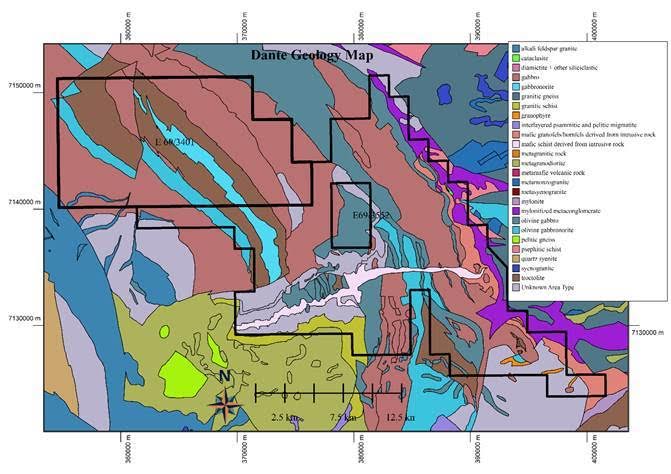
Figure 5. Simplified geology map at Dante Project displaying the dominant Jameson Layered Intrusion which covers the project. The primary lithologies are E69/3401: Gabbronorite, gabbro and troctolite; E69/3552: Gabbronorite, gabbro, olivine gabbronorite, mafic schist and mylonitized metaconglomerate.

 Figure 6. Map displaying the West Musgrave region (red square) centered at the junction of 3 major crustal boundaries, the West Australian, South Australian and North Australian Cratons. Source: H.M. Howard et al. / Gondwana Research 27 (2015) 64–94.

Magmatic Nickel-Copper-PGE Sulphide Deposits

Magmatic Cu-Au-PGE-Ni sulphide deposits, such as Nebo-Babel (West Musgraves region) Nova-Bollinger (Fraser Range region) and Julimar-Gonneville (Julimar region) are associated with large mafic-ultramafic intrusions and often develop in tube like intrusions referred to as chonoliths (refer Figure 7). Most major magmatic Cu-Au-PGE-Ni sulphide deposits occur in areas of structural complexity, such as craton margins. The West Musgraves region represents a unique structural setting ideal for the development of large magmatic sulphide deposits, being at the junction of 3 major crustal features; namely the West Australian, South Australian and North Australian Cratons (refer Figure 6).

Figure 7. Nebo-Babel Chonolith Geometry and dominant ore host lithologies (source Seat et al 2007; Hronsky 2003) and Right: Stages in propagation of a transitional dyke to chonolith transition (Barnes et al 2018).

Layered Intrusions

Layered intrusions host the majority of the world’s platinum group elements, which include platinum (Pt), palladium (Pd), rhodium (Rh), iridium (Ir), osmium (Os), and ruthenium (Ru), with the elements of most commercial significance being platinum, palladium and gold. In all cases, the reefs consist of laterally extensive layers of ultramafic or mafic rocks. The host intrusions are exceedingly sulfur poor, suggesting that sulfide saturation of the magma was eventually reached due to fractionation.

The Bushveld Complex, South Africa

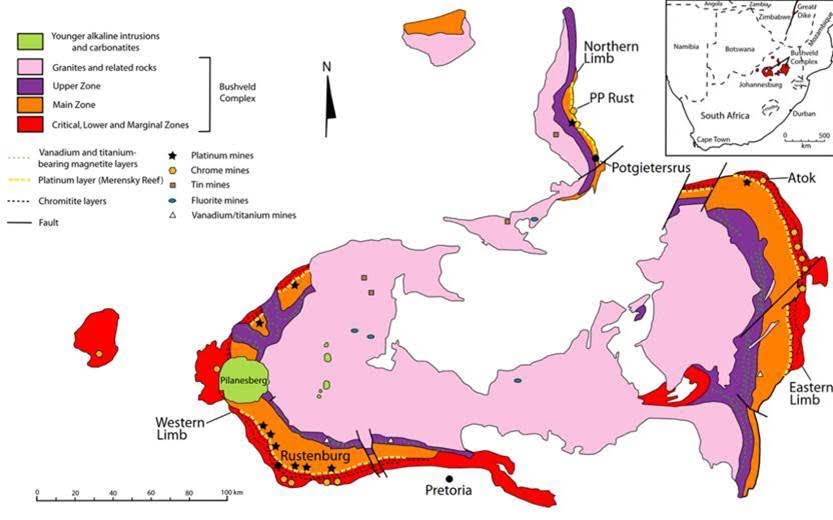
The Bushveld Igneous Complex (refer Figure 8) is the world’s largest layered intrusion and is thought to be about 2 billion years old. Located in South Africa, it currently contains the world’s largest reserves of platinum group elements, along with other elements such as chromium, titanium and vanadium. It represents about 75% of the world’s platinum and about 50% of the world’s palladium resource according to some sources. The Bushveld complex is known for its chromitite reef deposits and in particular, the Merensky reef and the UG-2 reefs. The lithologies are variable to some degree but are largely ultramafic peridotite, chromitite, harzburgite, and bronzitite in the lower sections to mafic norite, anorthosite, and gabbro toward the top.

Figure 8.  Schematic of the Bushveld Complex, South Africa, showing the various metallogenic provinces within the complex which includes specific layers which are commercial enriched in PGEs, Titanium, Vanadium, and Chromium.